 LAND NAVIGATION
CCNY Empire Battalion ROTCCDT Mbagwu
2nd "Freedom" Brigade13 MAR 2026TAC 1

 LAND NAVIGATION
Map margins contain critical information needed to properly use the map. Always inspect marginal data before navigating.
Explains all symbols used on the map. Located in the lower left margin.
Ratio of map distance to ground distance. Common: 1:50,000 (1 cm = 500m) and 1:25,000.
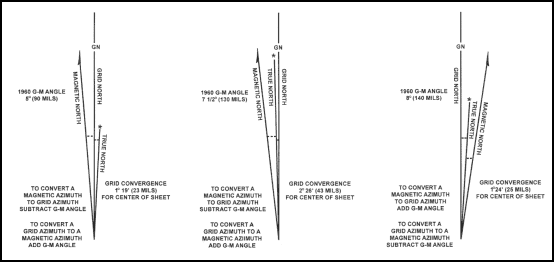
Shows angular relationships between Grid North, True North, and Magnetic North.
Instructions for creating a grid reference for the specific map sheet.
Edition and revision date. Older maps may have inaccurate declination diagrams.
Vertical distance between adjacent contour lines. Found in the margin below the scale.
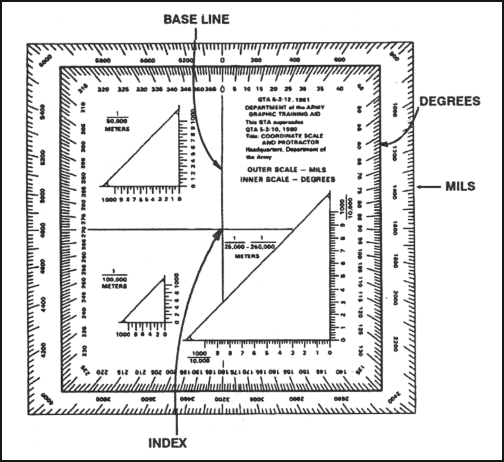
First read the easting (horizontal value along bottom), then the northing (vertical value along side).
| Digits | Format | Precision | Example |
|---|---|---|---|
| 4-digit | EE NN | 1,000 m | 18 30 |
| 6-digit | EEE NNN | 100 m | 182 305 |
| 8-digit | EEEE NNNN | 10 m | 1823 3054 |
| 10-digit | EEEEE NNNNN | 1 m | 18234 30543 |
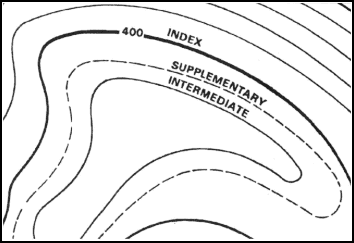
10 terrain features total: 5 Major + 3 Minor + 2 Supplementary
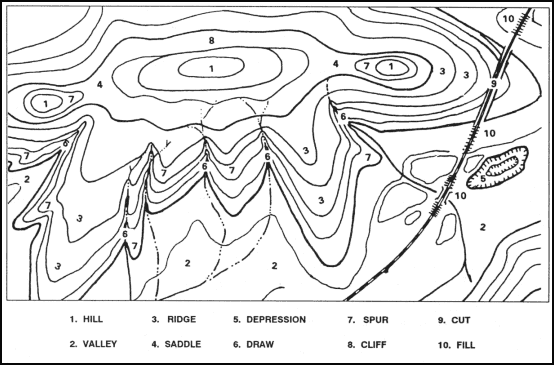
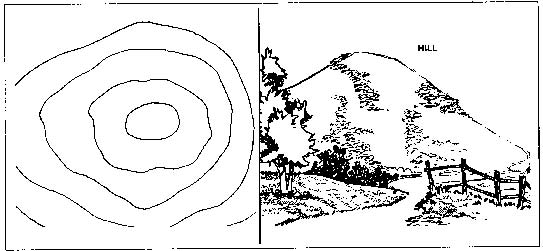
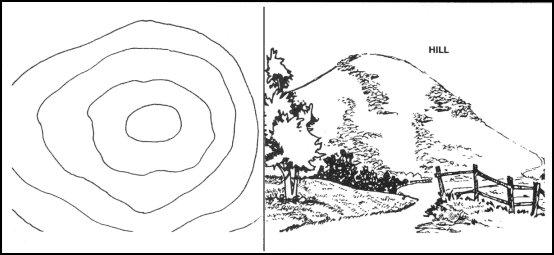
An area of high ground. Contours form concentric circles. Elevation increases toward the center.
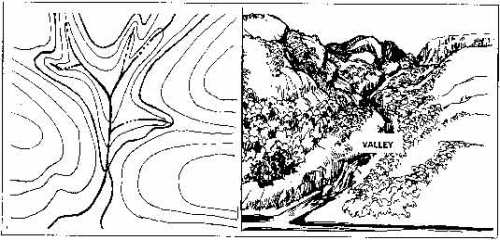
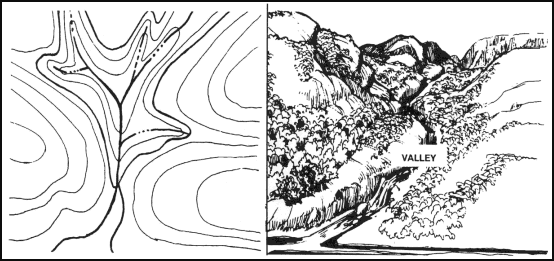
Stretched-out groove in the land. Contour lines form a U or V pointing uphill toward higher ground.
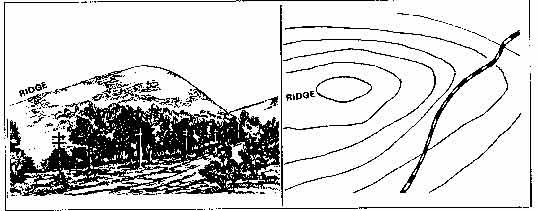
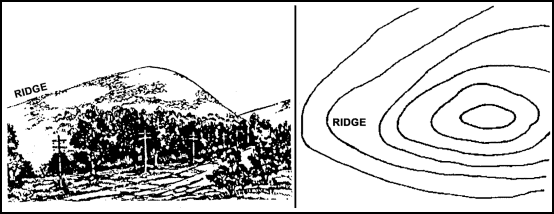
A sloping line of high ground. Contour lines form a U pointing away from high ground (downhill).
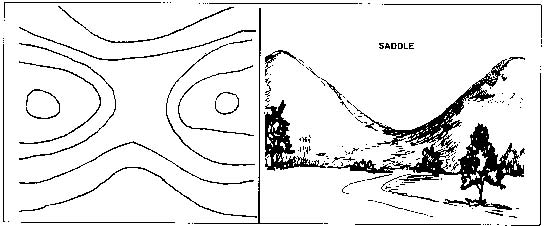
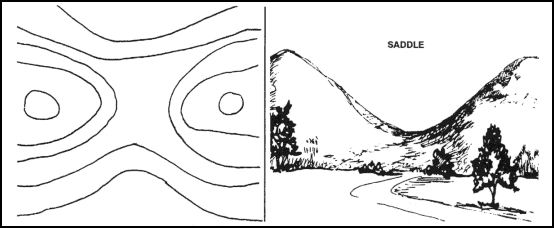
A dip or low point between two areas of higher ground. Resembles an hourglass on the map.
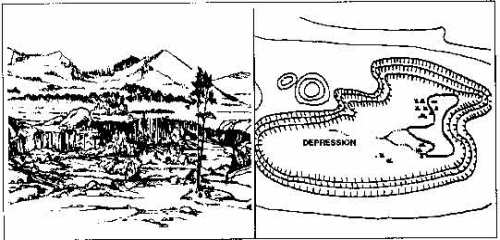
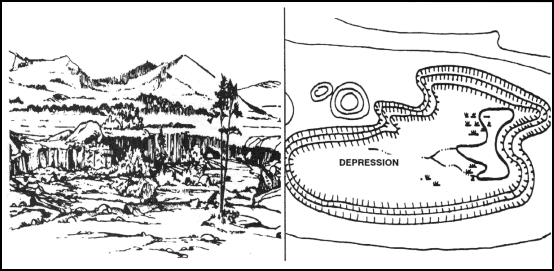
Low point surrounded by higher ground. Like a hill but with tick marks pointing inward (downhill).
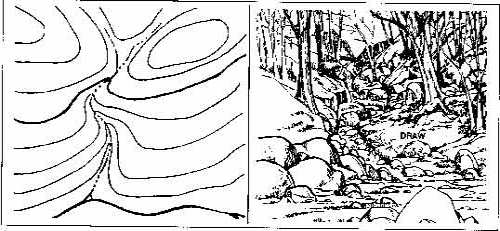
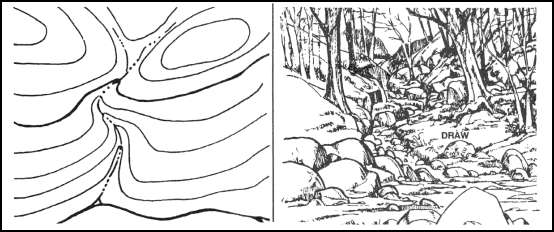
A less-developed stream course. Contour V's point uphill. Similar to a valley but smaller.
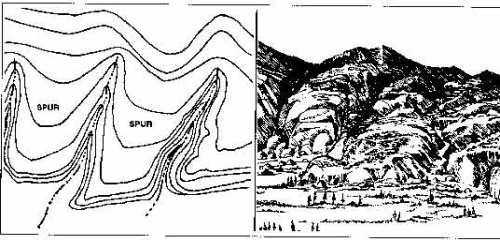
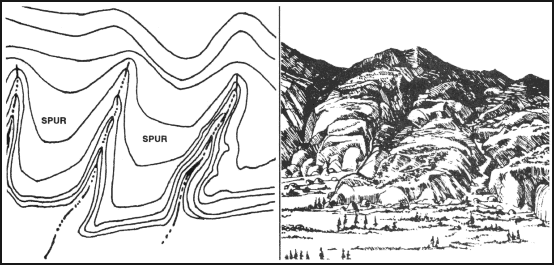
Short continuous sloping line of higher ground jutting from a ridge. Contours point downhill.
Vertical or near-vertical change in elevation. Contour lines very close together, touching, or overlapping.
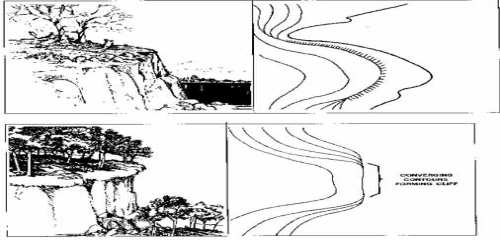
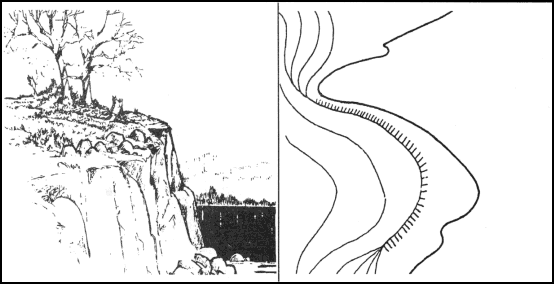
Man-made feature where earth has been removed (e.g., road through a hill). Tick marks point down toward the road.
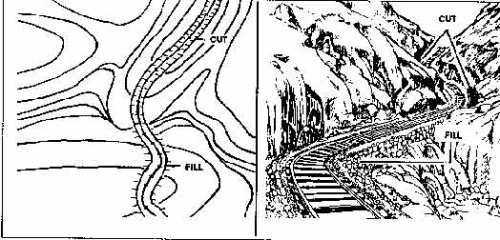
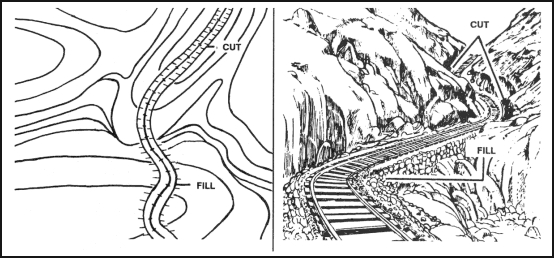
Man-made feature where earth has been added (e.g., road across a valley). Tick marks point down away from the road.
5 Major (HVRS-D) + 3 Minor (Draw, Spur, Cliff) + 2 Supplementary (Cut, Fill) = 10 Total Terrain Features
Reference: TC 3-25.26, Ch. 6 | TM 9-1290-333-15
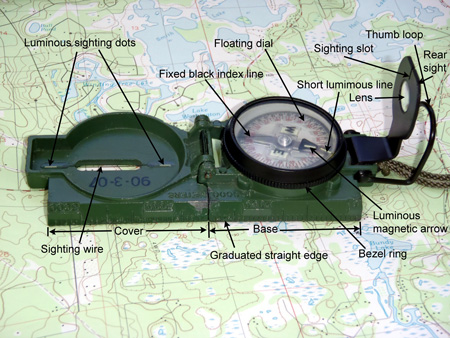
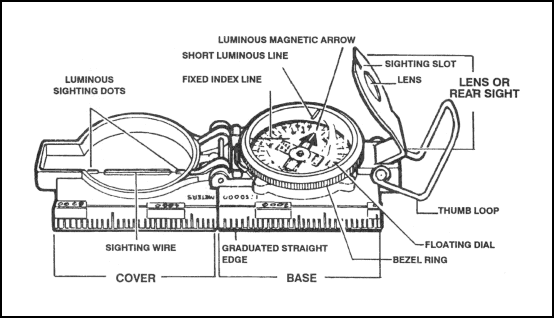
Accuracy: ±3° — Standard Method for Precision
When to use: Precise navigation, plotting azimuths, targeting distant objects.
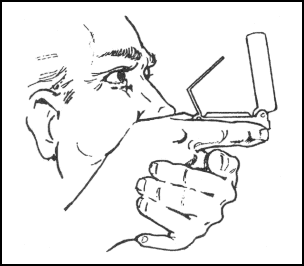

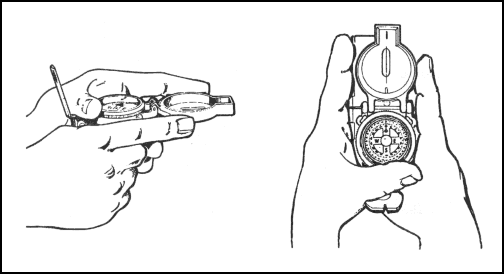
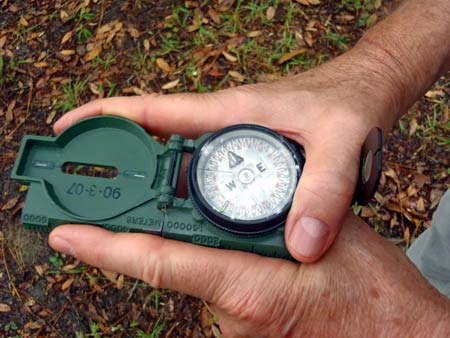
Accuracy: ±10° — Quick Method for General Direction
When to use: Quick readings, thick vegetation, poor visibility, following a general azimuth when speed matters more than precision.
| Method | Accuracy | Speed | Best For |
|---|---|---|---|
| Compass-to-Cheek | ±3° | Slow | Precision |
| Center-Hold | ±10° | Fast | Quick reads |
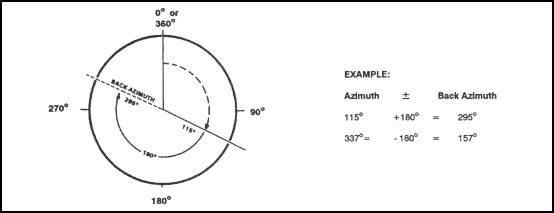
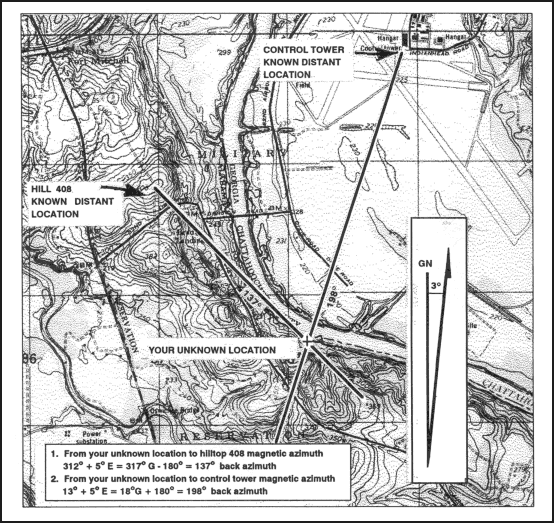
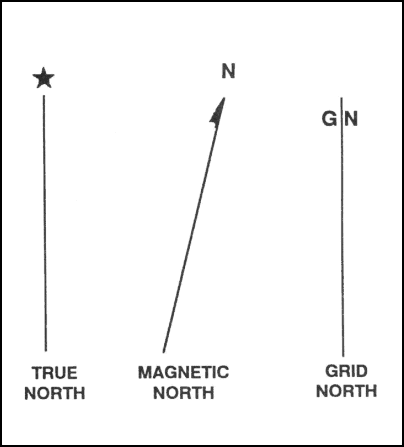
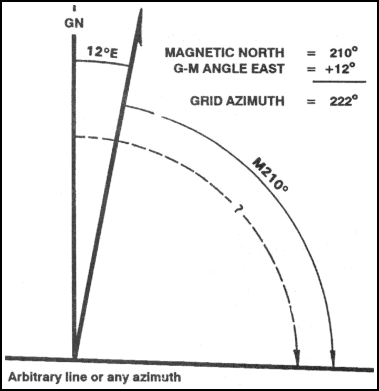
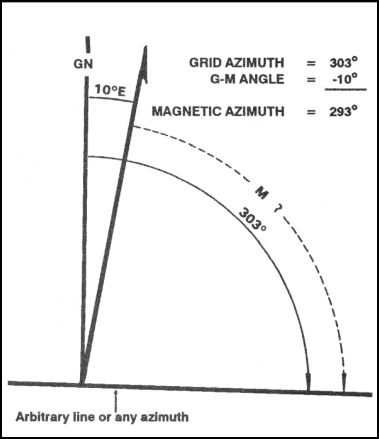
The declination diagram shows angular relationships between the three norths. This is critical for converting between grid and magnetic azimuths.
| Converting | MN Direction | Operation |
|---|---|---|
| Grid → Magnetic | MN East of GN | ADD G-M angle |
| Grid → Magnetic | MN West of GN | SUBTRACT G-M angle |
| Magnetic → Grid | MN East of GN | SUBTRACT G-M angle |
| Magnetic → Grid | MN West of GN | ADD G-M angle |
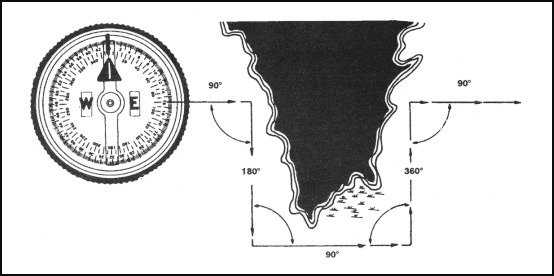
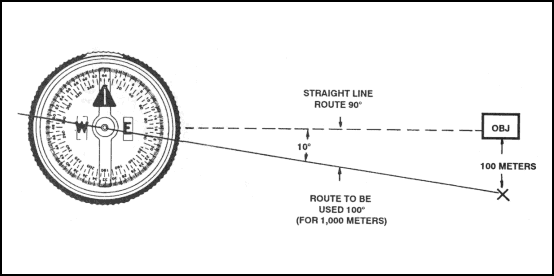
Navigate to a large, easily identifiable feature near your objective. Then make a short, precise movement to the target.
Example: Navigate to a hilltop (attack point) near your actual objective, then walk a short precise azimuth to the point.
Follow a linear feature (road, stream, ridge, power line) that runs roughly parallel to your direction of travel. Reduces navigation error.
Example: Follow a stream that runs roughly toward your destination.
A large, unmistakable feature beyond your objective. If you reach it, you know you have gone too far and need to turn back.
Example: A major road 200m past your objective.
"I know where I am. Where is THAT?"
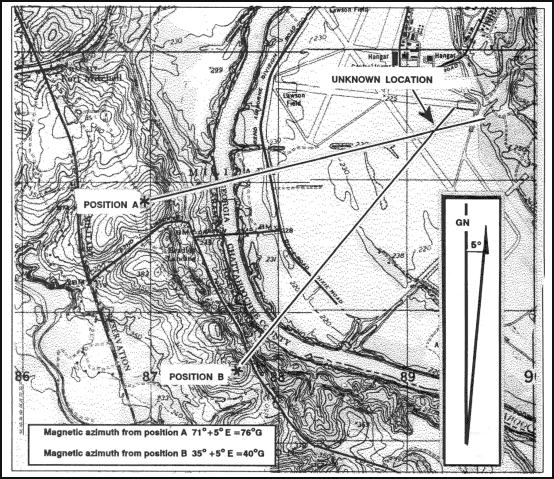
"I know what THOSE are. Where am I?"